623 PRs in a Month, 2 Rollbacks, No AI Slop
My team merges about 145 PRs a week with AI agents: 20-minute median to merge, 2 rollbacks in 623. Here is the policy and review gate that make it work.
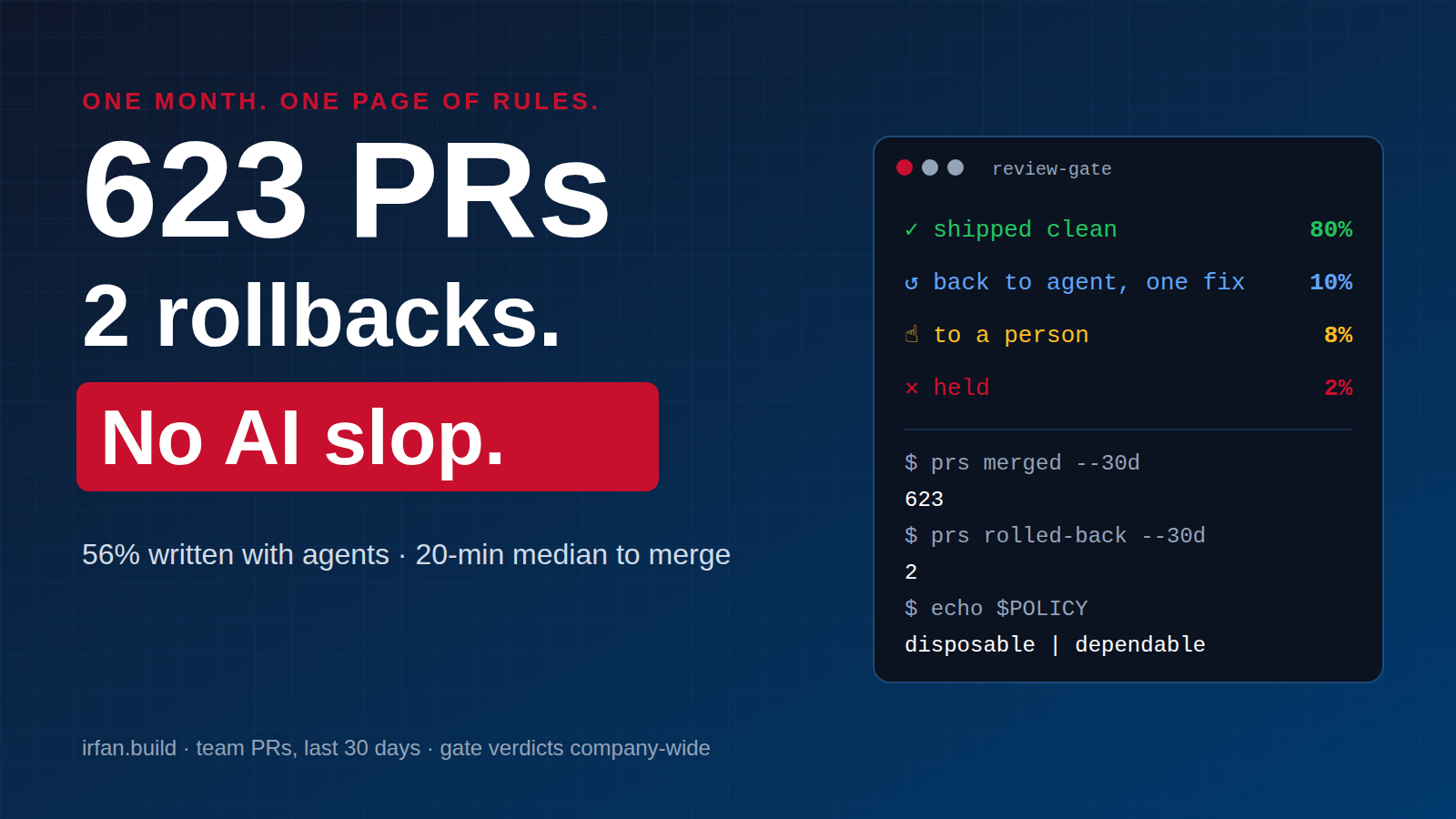
Last month my team merged 623 pull requests. Two had to be rolled back. The median one went from opened to merged in 20 minutes.
It wasn't a better model. It was a page of rules about what can ship on its own.
Anthropic launched Claude Ship this week, and its pitch is that Claude approves "the ones your team's policy allows." The tools are converging fast. The policy is still yours to write, and most teams haven't written theirs. Here's ours, with the numbers and the gate that enforces it.
The numbers
The usual worry is that more agent code means more breakage, and it's not paranoia. CodeRabbit looked at 470 open-source pull requests and found the AI co-authored ones carried 1.7 times as many issues as human-only ones: 10.83 per PR against 6.45. AI slop is real. It's also a review problem, not a reason to stop. So far, our gate has kept it out.
The last 30 days, team PRs only, across five of our codebases:
- 623 PRs merged, about 145 a week.
- 56% written with agents: engineers direct the agent, the agent writes the change, review checks it.
- 20 minutes median from opened to merged.
- 2 rollbacks out of 623, or 0.3%.
The clearest before-and-after is our newest product. From June to September its repo averaged about 2 team PRs a week. In October we brought agents in, and it has run at about 40 a week since. That's roughly 20 times the change. Same product, a different way of working.
The other codebases joined this setup in October too, so they have no clean "before," and I won't invent one. So far, speed hasn't cost us safety. One product and a few months isn't proof, but it's the direction I'd bet on.
One question
Every change gets asked one thing: does a customer, their data or a payment rely on this yet?
If not, the change is disposable. Internal tools, prototypes, a new page nobody depends on yet. CI passes, the review comes back clean, it ships. If it's wrong, we fix forward or regenerate it. Treating this code as precious is how teams with agents end up slower than teams without them.
If yes, the change is dependable. Sign-in, checkout, member data, anything the money path reads. Everyday changes here still ship on green. Three kinds of change are proven first and wait for a person:
- Risky database changes. Adding a table is fine; changing or dropping one isn't, because a bad migration is the one mistake you can't regenerate.
- Permission changes, because a bug there isn't a bug, it's a breach.
- Deploy and infrastructure changes, because they move the ground everything else stands on.
Two categories, three exceptions. Gate everything the same way and you either crawl or you break what people rely on. Knowing which is which is the leadership job.
The gate
Every PR gets an automated agent review in CI. The ones that touch dependable code also get a written verdict from our review gate: 519 since 7 November, counted company-wide.
Each codebase has its own agent that knows it. The reviewer agent works by four rules:
- Assume there's a bug. Its job isn't to approve; it's to find the problem.
- A finding must be proof: a failing command or a quoted line of code. Style opinions block nothing.
- Break the tests on purpose. When a PR adds tests, the gate breaks the code they cover. If nothing goes red, the tests protect nothing, and the PR goes back.
- No proof, no pass. Every verdict carries the commit, the build and the result.
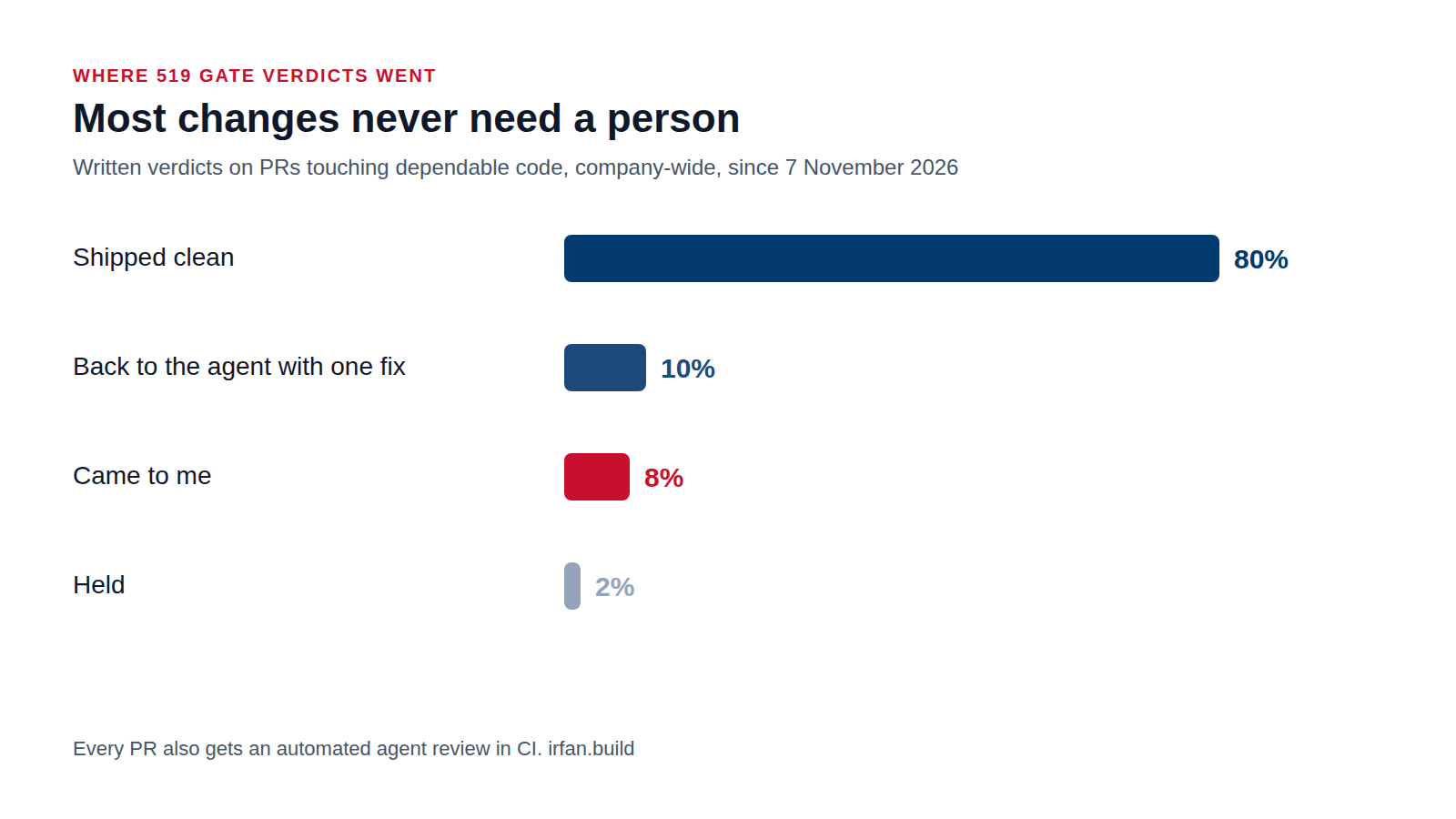
How the 519 verdicts landed:
- 80% shipped clean.
- 10% went back to the agent with one specific fix.
- 8% came to me.
- 2% were held.
That 8% is deliberate. About 1 in 12 gated changes lands on my desk, and I want it there: those are the ones where a wrong call costs a customer, their data or money. A bottleneck you chose on purpose, for the right 8%, is a feature.
What engineers do now
The question I get most is "so what do your engineers do now?" More of the work that matters, less of the work that doesn't.
Writing the first draft of a change is the cheap part now. The expensive parts are the ones agents are bad at: deciding what to build, splitting it into changes a reviewer can reason about, writing the policy for a new codebase, and owning the outcome after it ships.
Review changed most. Nobody reads 145 diffs a week line by line, and nobody should. People check the gate itself: is it catching what it should, is it blocking things it shouldn't?
It also changed what "fast" means. A 20-minute median isn't people rushing. It's small changes, a gate that answers in minutes, and no queue of PRs waiting for a busy lead to find time. Most delay in engineering was always waiting, not typing.
Where it goes wrong
It goes wrong in three predictable places, and none of them is the agent writing bad code.
No policy, just vibes. A team turns on agent review, everything goes through the same gate, and within a month the gate is either rubber-stamping or blocking everything. Write down your disposable and dependable lines before you turn anything on.
Proof by assertion. An agent says "tests pass" and nobody checks that tests ran, or that they test anything. That's why our gate breaks tests on purpose. An unverified "all green" is worse than no review, because it buys false confidence.
Everything waits for the same two people. If every agent PR queues for your senior engineers, you've built a faster way to make a queue. Most changes shouldn't need a person, so the people you have can go deep on the few that do.
Start this week
You don't need a platform project to start. You need four things, in this order:
- Draw the line. List what's disposable and what's dependable in your systems. It takes an afternoon, and it's the most valuable afternoon you'll spend on AI this quarter.
- Name the exceptions. Risky database changes, permissions and deploys are a good default. Add your own if part of your money path is special.
- Make the reviewer suspicious, and make it prove things. Failing commands and quoted lines, not opinions. Break new tests on purpose.
- Measure four numbers from day one: PRs merged per week, share written with agents, median time to merge, and rollbacks. If the first three go up and the fourth stays flat, you're on the right path.
Then start with one codebase, ideally one where most change is disposable. Our biggest jump came from a brand-new product, not the oldest system. Earn trust where mistakes are cheap, then move the line.
The policy is yours
Every month brings a new tool that reviews, fixes or merges code for you. Claude Ship is the latest, and it won't be the last. In the end they all ask the same question: what does your team's policy allow?
Answer that clearly and you can ship far more change without more incidents. Leave it vague and you'll either drown in review or find out what your policy was from a production incident.
The model isn't the moat. The policy is.
Writing your own team's policy right now? I'm always up for comparing notes with other engineering leaders. Grab 20 minutes and bring your hardest "should this ship on its own?" case.
Thanks for reading.
Notes on AI-native products, platforms and operating models, from twenty years of building technology that pays its way. If this one landed, let's talk.
More writing
All writing →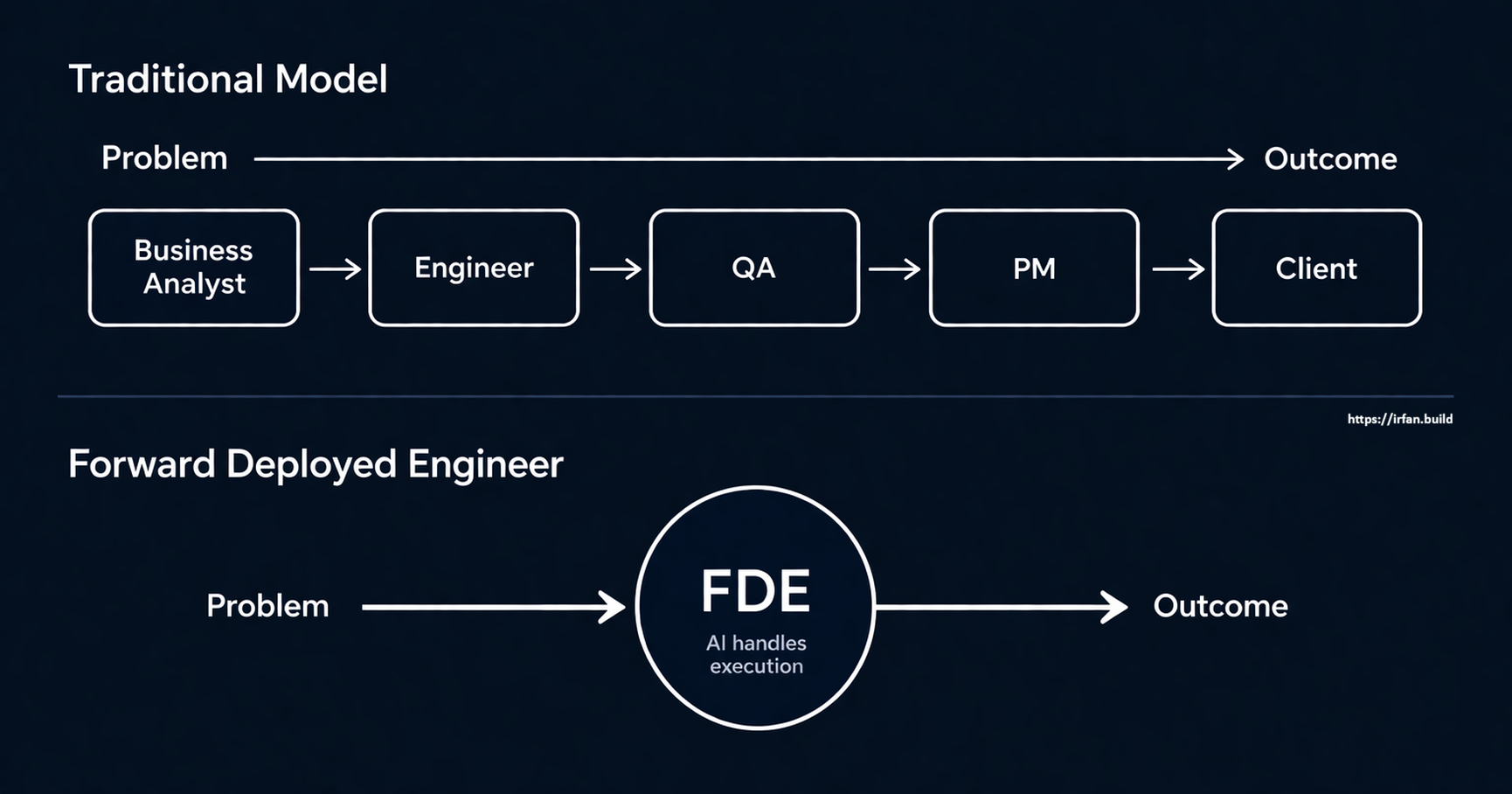
Palantir built a role in 2015 that most companies had never heard of. One engineer, full ownership, deployed directly into the client's problem. AI didn't create the role. It made it possible at scale.
Read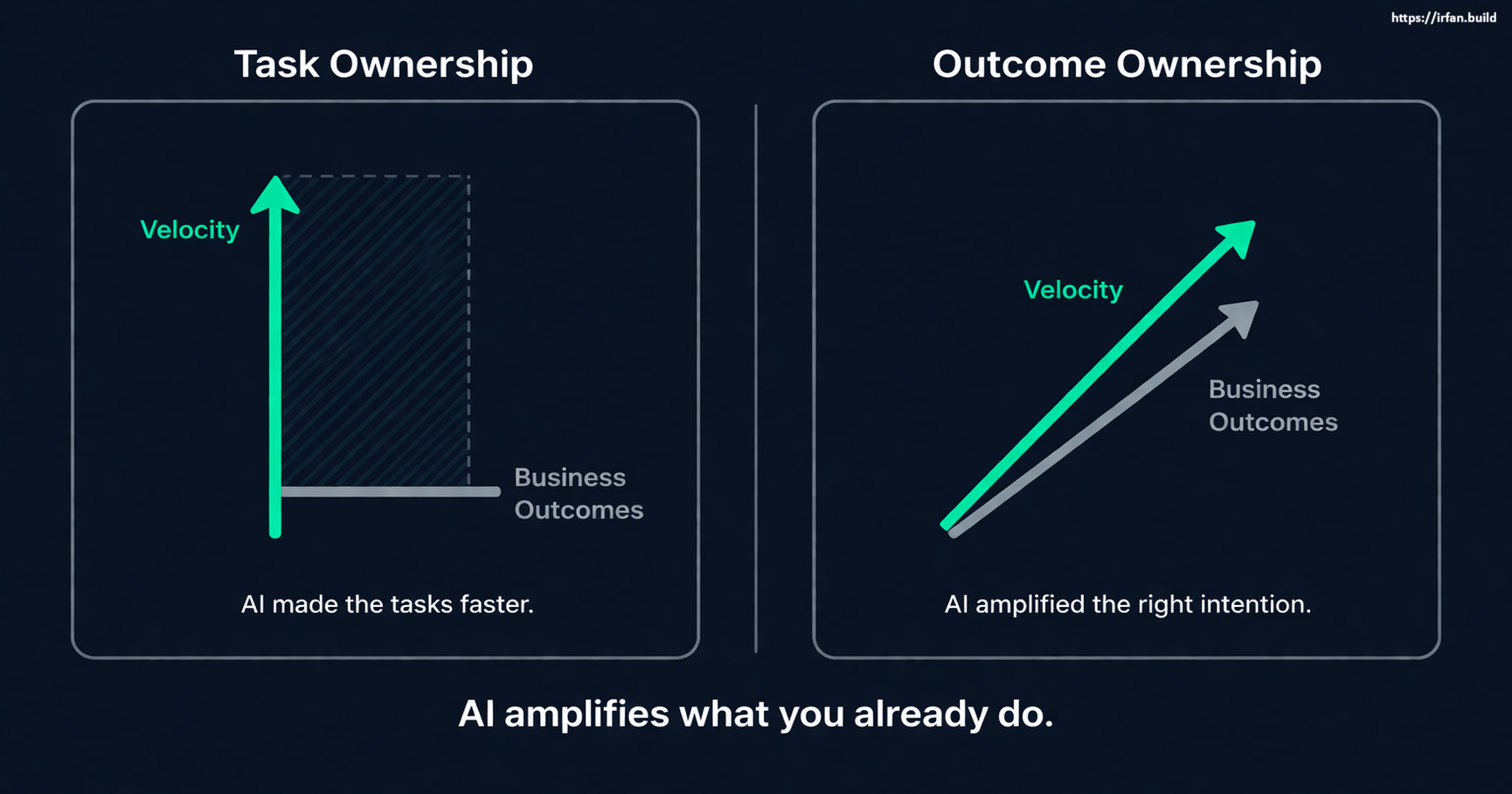
Teams frustrated with AI ROI share a common pattern. The tools are working. The work is getting done faster. The business outcomes have not changed. That is not a tools problem.
Read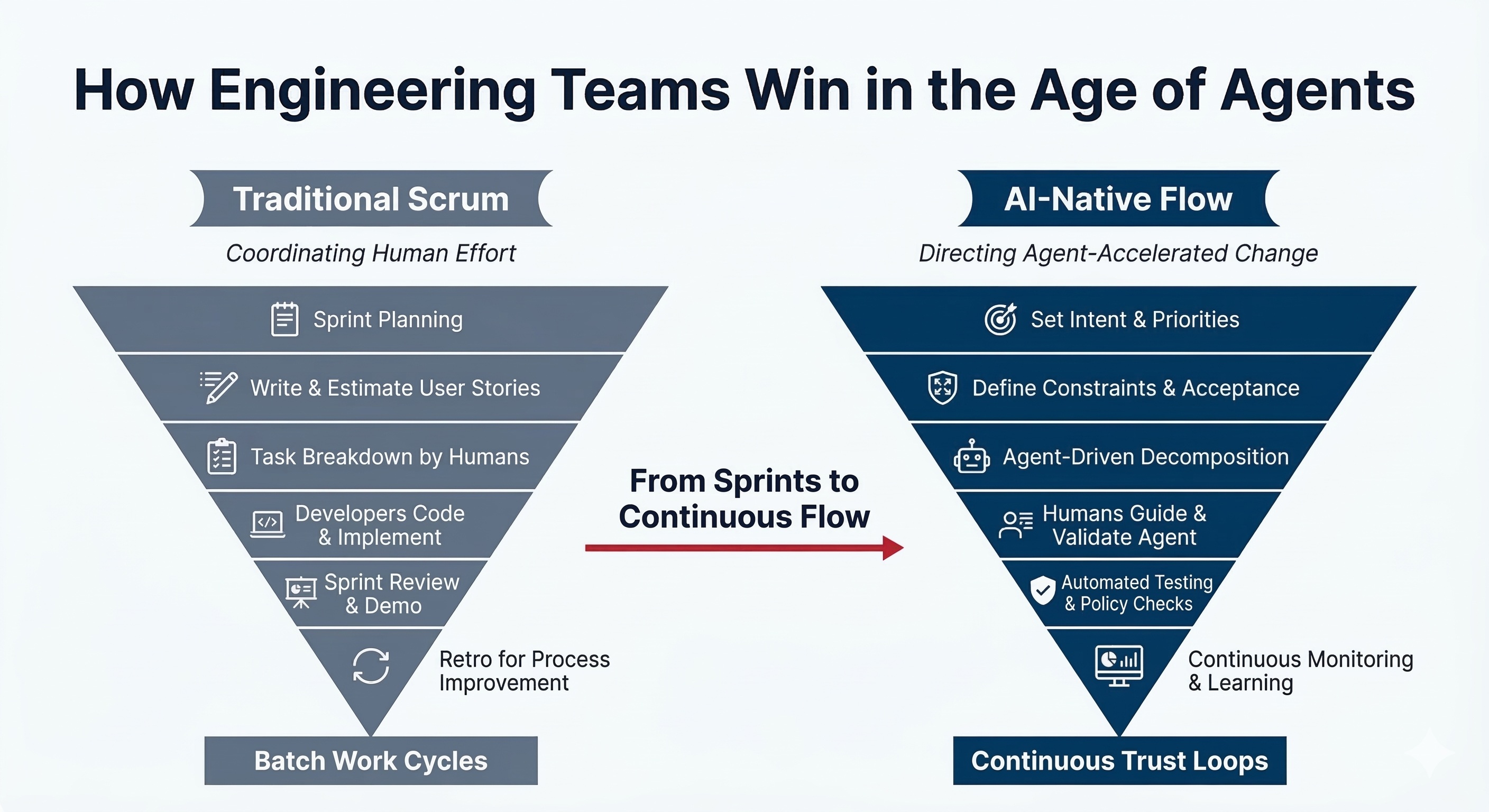
Agents made execution cheap. The bottleneck moved to context and verification. Here's the operating model engineering teams are using to win.
Read